


Felony Pursuit Dreamcast: A racing game that couldn’t make its way through the heavy traffic of Dreamcast releases
After Totem and Alpha by Kalisto Entertainment, Agartha by No Cliché, Quark by Quantic Dream, and Jekyll & Hyde by In Utero, let’s continue exploring the Unreleased Dreamcast titles developed by French studios—those whose “French Touch” once sparked so much excitement. Hard to define precisely, the “French Touch” in the late ’90s embodied a distinctly French approach to video games, with a style that stood apart from what other countries were producing.
Let’s venture, through this article, behind the scenes of a little-known cancelled game for the “White Lady”, developed by the Paris-based company Polygon Studio. Let’s uncover the winding journey—from its development to its cancellation—of their racing game Felony Pursuit (FP), or June for those in the know.
Terry Proto (idea originator and co-founder of Polygon): « It was a very ambitious project—perhaps a bit too much so. We did a huge amount of design work, with three designers, including two urban planners and one automotive designer. »
The core idea behind Felony Pursuit is to drive recklessly and wreak havoc behind the wheel in a fictional city, featuring numerous districts with varied architectural styles and distinct ways of life. On top of that, the game allows players to roam freely across a vast map, without the usual constraints of closed tracks found in other racing games. Felony Pursuit tries to answer one question: “What would happen if players could do whatever they wanted behind the wheel of a vehicle?”
Had it been released, Felony Pursuit would have been part of the first wave of open-world driving games, a movement sparked in 1997 by the highly controversial Carmageddon on PC. The Sega Dreamcast would have gained a forward-thinking title, paving the way for a new genre. What a missed opportunity…
Polygon Studio and their innovative games
Before getting to the heart of the matter and diving into the origins of Felony Pursuit, the reasons behind its cancellation, its gameplay mechanics, and more, it seems essential to dedicate a chapter to its development studio—highlighting their other productions and shining a light on the men and women behind the scenes. The creation of Polygon Studio stems directly from the creative journey of Felony Pursuit / June.
The homepage of Polygon Studio’s website, featuring a Felony Pursuit car and a Thingumajig orphan character

Founded in 1996/1997 by Terry Proto, Gaspard de Dreuzy, Simon Caby, and Olivier Van Themsche—some of whom came from Cryo Entertainment—Polygon Studio set up in Paris’s 16th arrondissement, in a small office at 9 Rue de l’Annonciation.
Terry Proto: « The name Polygon Studio is very simple. The foundation of creating any 3D object is a polygon. Quite simply, the raw material of what we were developing and selling was polygons. »
The first year of operation for the fledgling company was not easy. They urgently needed to secure an investor to kick-start the development of their upcoming game, Felony Pursuit, and maintain a stable financial situation.
Terry Proto: « We had started a first project based on Michel Strogoff. We were supposed to have secured 600,000 French francs for it… I don’t remember what happened with Strogoff, I’ve forgotten. It was a pretty bleak year for us, where we were between having started June, pitching it, talking to publishers—do they want it, do they not? Signing a deal doesn’t happen in five minutes; it’s more like a year of discussions… »
From London to Los Angeles, they went from one pitch to another, presenting June to publishers in the hope of securing a deal with one of them. Six publishers—including Eidos Interactive and Electronic Arts—turned them down. Down to their last savings and with nothing to lose, THQ—their final shot—showed real enthusiasm about working with Polygon Studio. They could finally breathe and bring Felony Pursuit to life!
Terry Proto: « I’m very, very grateful to have started out in this field, because everything I’ve done since in my life has felt like a walk in the park after beginning in video games. It’s the highest level of technological complexity, the highest level of creative complexity, and the highest level of financial and business complexity—there’s risk everywhere, in every direction. After that experience, everything has always seemed easier and more relaxing. »

At the height of its growth, Polygon Studio employed around 30 people, all contributing their talents to the company’s various productions. Unfortunately, they lost their main backers following the cancellation of Burning (Infogrames) and Felony Pursuit (THQ) for unforeseen reasons. The studio’s management tried, unsuccessfully, to find new partners to publish their games. After a year of searching with no incoming revenue, the studio shut down in 2001 due to a lack of funds. The main projects, aside from June, undertaken by Polygon during its four years of existence:
Jean-Charles Perrier (Programmer): « It was the cancellation of Burning that led to the end of Polygon Studio, about a year after the cancellation of Felony Pursuit. »
-
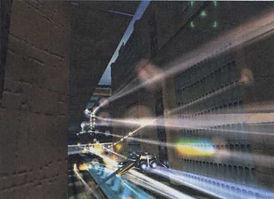
Mayhem: A 3D Shoot ’em up on PC, a clone of Star Fox, running on the first 3DFX graphics card. Coded in just a few months during the spring of 1998, its development never went beyond the stage of a simple demo. The game was never intended for commercial release, and was likely conceived as a technological showcase for Polygon Studio. Shoot ’em up + 3D—just two words that are enough to make fans of the genre want to give it a try!
Simon Caby (Co-founder of Polygon and Technical Director): « My specialty was real-time rendering. In that area, we had a significant lead; that is to say, without a graphics processor, we were able to run things at a time when no one else could. It allowed us to create pseudo-playable demos that were very, very impressive. »
Mayhem, doesn’t it have a bit of a Geist Force vibe?
-
Burning: A firefighter simulation game with a third-person perspective. Planned for the Xbox, its concept revolved around extinguishing fires and rescuing victims trapped in the flames. Its publisher, Infogrames, ultimately canceled the project during its pre-production phase.
Terry Proto: « We wanted to have a real, physically simulated fire. The problem is that, since it’s an interactive video game, it raised a billion issues in terms of gameplay, gameplay balancing, game mechanics, and timing; Burning itself would have suffered from the same problems as June, for the same reasons—too much ambition. »
All in a day’s work for a firefighter

Texture of one of the characters named June, a nod to the codename of Felony Pursuit

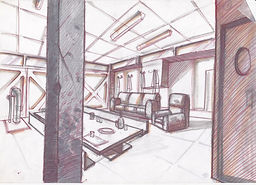
Artwork from Burning (Xbox), depicting the interior of a building
-
Thingumajig: An adorable action-adventure title with no form of violence, comparable to the film The Goonies. No one dies in Thingu. Its gameplay focused primarily on managing fear and the sense of anxiety generated by the character controlled by the player. In its own way, Polygon Studio’s game was based on the rules of hide-and-seek. Thingumajig ultimately never found a publisher, although SEGA had shown interest in releasing it on the Dreamcast. With this project, Polygon Studio was mainly targeting the DC. To learn more about Thingumajig and play its demo, visit the page: [Thingumajig 3DFX and its Demo: An intimate Polygon Studio game aimed at the Dreamcast that SEGA had considered publishing]
The “French Touch” with Thingumajig

Jean-Charles Perrier: « Thingu wasn’t really in development; there were quite a few concepts around it, but nothing concrete as far as I know (maybe a small prototype). Which is a shame—the little I saw in terms of concepts had soul; there was clearly something to be done with that game. »
Unknown to the general public, Polygon Studio would “never” make a name for itself in the industry by releasing these few promising titles, all of which nonetheless featured innovative concepts. None of them would ever make it onto store shelves or captivate consumers. Alongside their main productions, PS employees also worked on web projects (Locinter, Sodimmo, Tradeok) as well as educational titles such as Zoombinis and Plume the Bear.
Simon Caby: « The amount of development we carried out at the time was significant; in the end, without really saying it, we were doing a lot of R&D. Some of the people who worked for us went on to have very successful careers. Perhaps it’s necessary to have companies that exist simply to build skills. »
How could you not fall under the spell of Thingumajig… It has something truly indescribable about it; and yet, its development had only just begun!
Felony Pursuit and its development: The drive to surpass themselves
Polygon initially aimed to bring to life a bold car racing game for the Dreamcast and PC—certainly the most significant project of the French studio. Titled June/Felony Pursuit, its publisher, THQ, had planned to release it in the spring of 2000. But nothing went as planned—as is often the case in the unforgiving world of video games…
The Felony Pursuit bible (the famous GDD)

Terry Proto: « June was the game’s codename and the name we all used; Felony Pursuit was pushed by THQ—our publisher—at the last minute, and everyone on the team hated that title. »
The car chase from the film The Rock, set in San Francisco, strongly inspired the foundations of Felony Pursuit. In Michael Bay’s cinematic work—a true gem of action cinema—Nicolas Cage, behind the wheel of a yellow Ferrari convertible, chases Sean Connery in his black Hummer through the city’s steep streets, known as “The City by the Bay”. Each adopts a radically different driving style. The Scottish actor uses the military off-road vehicle like a battering ram, crashing into anything and everything to block his pursuer(s). Meanwhile, the nephew of Francis Ford Coppola, driving a light and fragile supercar, tries to avoid the obstacles caused by the fugitive’s reckless driving in order to catch up. The idea was to translate these contrasting driving styles into a video game, capturing the unpredictability of a real high-speed manhunt while giving players as much freedom as possible. With Felony, the developers moved away from traditional races on closed circuits.
The June project was launched in 1997/1998 and lasted for about a year before being abandoned. Its development would have required at least another year to be completed. The programmers estimated that their engine would lose around 50% of its performance if they chose the Dreamcast’s Windows CE. As a result, they decided to code it natively, like roughly 90% of the console’s game library.
Jean-Charles Perrier: « One of the main tasks of console programmers is to make the most of the machine’s resources; since the hardware is fixed and known in advance, you can take a lot of shortcuts, which, when combined, make a significant difference. Windows CE isn’t designed for that—the only reason to adopt it is budgetary. »
Between 5 and 15 people, depending on the game’s needs, made up the Felony Pursuit team. At the final stage before development was halted, progress on their custom engine, GORE, had reached about 80% of its intended capabilities. However, the physics engine and the AI requirements for computer-controlled vehicles were still missing. The city itself was already rendered on screen, but only at an alpha level—around 70% of what it was meant to be. The game’s interface (menus, save system, etc.) had not yet been implemented, and several vehicle assets were still lacking. Before even considering adding missions and a storyline to their prototype, the developers wanted to ensure the engine ran efficiently on the Dreamcast and that the entire city could fit onto a GD-ROM. As for the gameplay mechanics, they were either not implemented at all or only barely present. In the end, a great deal of work remained before the project could become a finished product.
Jean-Charles Perrier: « The internal codename for the graphics engine was: GORE — Game Oriented Render Engine. »
The automotive designer must have had a great time creating the cars for Felony Pursuit
As for the features specific to Dreamcast, shortly before the project was abandoned, members of Polygon Studio discussed the possibility of an online multiplayer mode, though nothing concrete ever came of it. However, someone did briefly look into the console’s networking capabilities. On the VMU (called VMS in Japan and the United States) side, some code was running on the memory card, but without any defined mini-game design—only as a proof of concept, a method used to assess the feasibility of a project.

The meeting point between the roles of Game Artist and Automotive Designer
Jean-Charles Perrier: « At the stage we had reached, with a few adaptations and optimizations, the game was indeed running on the Sega Dreamcast. The Dreamcast was (and still is) a very good machine—many games have proven that. I don’t have much doubt that a solid result could have been achieved on this project. »

The development of Felony Pursuit was closer to R&D (Research and Development) than to the creation of a traditional video game—so to speak. Many ideas that had rarely, if ever, been explored in the industry at the time were experimented with in FP. In their constant pursuit of innovation, the Polygon Studio team aimed to make their city feel as alive as possible, with realistic NPC behavior. Each character went about their daily routine, much like real people: finishing work around 5 p.m., leaving the office, enjoying leisure activities, and heading home—sometimes stopping along the way to shop for dinner. All this activity on the roads naturally led to heavy traffic congestion during rush hours. Pedestrians, for their part, would always manage to flee while screaming just before impact if a car sped toward them. Years later, Sega AM2 would implement a similar “living world” system in Shenmue on the Dreamcast. While it wasn’t the first game to feature such mechanics, it undeniably refined and popularized them. Earlier pioneers in this area include Lure of the Temptress (Amiga), the Ultima franchise (since 1990 on PC), Mizzurna Falls (PlayStation), and Brave Fencer Musashi (PS1). Today, one of the developers from that era and from PS runs a company specializing in the simulation of pedestrian and vehicle behavior. For example, he provides services to SNCF during the planning and public inquiry phases of new train station construction projects.
More of an architectural drawing than a concept piece

Simon Caby: « We had a whole system for simulating a living city. We wanted to avoid those half-characters wandering around without purpose. We didn’t want characters popping in and out of existence—move forward, move backward, and suddenly they’re different ones. We wanted them to have some form of persistence, and for vehicle paths to make sense; we didn’t want cars driving aimlessly or just following rails. »
At the end of the second millennium, the ever-increasing power of home consoles and PCs finally made it possible to create open-world racing games. And yet, this new genre would only truly take off a decade later with the success of the Forza Horizon franchise, launched in 2012 by Microsoft. Developed alongside Crazy Taxi (1999/2000 – Naomi/Dreamcast), Midtown Madness (1999 – PC), and Driver (PS1), Felony Pursuit (Dreamcast/PC) aimed to establish itself—like those titles and Carmageddon (1997 – PC)—as one of the pioneers of open-world driving games. Scariest Police Chases: Deadly Pursuit (PC/Dreamcast, 1999), another Unreleased title targeting SEGA’s final console, clearly illustrates the direction many studios were taking at the time, with racing games all embracing the same core idea: freedom behind the wheel.
Terry Proto: « It was developed at the same time as the first Driver—and well before the Grand Theft Auto games. Some ideas are simply in the air; different people, faced with the same problem in different places, will sooner or later tend to come up with the same solution at the same time, because it just makes sense… »
The high-octane chases of Felony Pursuit were set in 2006—based on the developers’ vision of the future back in 1998—within a dynamic 21st-century city fully rendered in 3D. Several professional urban planners worked to bring this city to life on screen as if it were a real metropolis, with all that entails: addressing environmental, social, and economic challenges; making it inclusive and sustainable; adapting urban design to all types of inhabitants; and planning for its future expansion. The building concepts featured alongside this article reflect the level of detail and perfectionism the team pursued in imagining and designing this world.
Jean-Charles Perrier: « The size of the city was large for the time—I don’t remember the exact figure anymore, but yes, it was an open world. »
In the shoes of a police officer, a criminal, or even a superhero (a wild bonus character to unlock), this PS title was built around a simple storyline presented through 38 missions, with strong replay value thanks to a scoring system. Behind the wheel of 18 vehicles designed by a certified automotive designer—whose distinctive touch is evident in the car artwork featured on this page—the goal in Felony Pursuit was either to stop fleeing suspects or evade law enforcement. Skilled drivers would need to rely on cunning to reach their destination in one piece, weaving through heavy rush-hour traffic, navigating around jams caused by NPCs, slaloming between unsuspecting pedestrians, and keeping a close eye on red lights at intersections. An accident could happen at any moment, with potentially severe consequences for how events unfold!
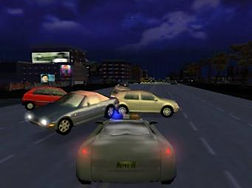
An unavoidable collision
Terry Proto: « The story wasn’t the driving force behind our game—that wasn’t the point. Nowadays, we live in a world of highly narrative-driven games, as shown by the latest Marvel's Spider-Man 2 on PS5, which is almost like a movie. It wasn’t like that at all back then. In the 1990s, we were focused on technical achievement—‘Wow, we have a rendering engine,’ ‘Wow, we have a physics engine,’ ‘Wow, we’ve hired designers,’ which no one else was really doing.»
A desire for grandeur, a race for innovation, overwhelming ambition, a drive for excess, and a willingness to push beyond established norms perfectly sum up the bold and almost reckless project undertaken by Polygon Studio with Felony Pursuit.
Felony Pursuit: The end of its ambitions
Low-key and discreet, Polygon rarely communicated about their new THQ-backed production. The specialized press barely covered it before its cancellation, with only a few scattered mentions—sometimes under the name High Speed Pursuit—appearing in magazines. Some journalists attended a Felony Pursuit demo “behind closed doors”, held in private suites on the upper floors of the Los Angeles Convention Center during an Electronic Entertainment Expo. Carefully staged, polished, and highly controlled to avoid revealing flaws caused by the game’s early stage of development, the presentation successfully highlighted the originality of the Paris-based studio’s upcoming title. This edition of the California trade show—its only “public” appearance—ranked Felony Pursuit among the 10 most promising projects of the time.
Terry Proto: « We had barely started talking about the game at an Electronic Entertainment Expo before it got cancelled. I stepped away for about an hour and a half over those two or three days—on the last day—to take a quick look around the show floor and see other games. When I came back, Christine Richard, the producer at THQ, told me: ‘Thierry, Thierry, where were you? We were looking for you everywhere. Steven Spielberg came by with his kids and spent 10 minutes in front of the game—he thought it was amazing’. I missed Steven Spielberg praising our game. »
Felony Pursuit was starting to become playable and take shape. At Polygon Studio, the team was just beginning to build and iterate on the core gameplay experience. They would never get the chance to fully explore this phase of development—often considered the most exciting by many industry professionals. THQ, then undergoing a major restructuring following the departure of its Senior Vice President, began revising its corporate strategy. The newly appointed leadership decided to reassess all ongoing projects and cancel most of them. Felony Pursuit ultimately fell victim to this internal reorganization at the publisher.
Homemade cover of the game created by Benedikt Scheffer

The departure of Michael Haller (Senior Vice President) from THQ came at the worst possible time for Polygon Studio. The French studio lost its strongest supporter. At that very moment, the development team was facing major issues with its physics and AI engines. In truth, they never really worked properly—much like on the Burning Xbox project. Polygon considered purchasing an off-the-shelf physics engine or simulating one, as seen in Ridge Racer on PlayStation, to work around the problem. Unfortunately, the studio never had the time to pivot. During the first milestone presentation of Felony Pursuit without Haller’s backing, the game failed to meet the required criteria to continue development, largely due to the issues mentioned above. That was the end for Terry Proto’s brainchild…
The world of video games is ruthless—especially when politics and rivalries among a publisher’s executives interfere with a studio’s project!
The City: The Stage for Felony Pursuit
A short cinematic sequence introduces Polygon Studio’s game. From Earth’s orbit, the camera slowly zooms in on the rising star of Felony Pursuit: its city. It dives diagonally toward it, then shifts its angle upon reaching just a few meters above a vast body of water. The camera then glides horizontally over the ocean before entering the city itself, offering a guided tour through its lively streets. Suddenly, the moving shot comes to a halt, transitioning seamlessly into a live high-speed chase. Now tracking several vehicles weaving at full speed through dense traffic, the camera captures the action—until the unthinkable happens. A spectacular pile-up unfolds before the stunned eyes of the audience. The cutscene ends in total chaos, leading the player straight into the main menu of Felony Pursuit.
Not representative of the final intro cutscene, these three renders come from the version created to pitch Felony Pursuit to a publisher


The fictional metropolis of Felony Pursuit, called Hudson Key, is located in South Florida within a parallel reality. Built across a cluster of islands, it is crossed by a major highway that connects it to the mainland. The city is divided into seven districts, each with its own distinct personality. Here they are:
Terry Proto: « No one had ever done that before—having a huge city streaming in real time. Just taking a camera, moving around and flying over the city for 10 minutes, everyone was like: ‘Wowwwww. »
West Palm: The upper class lives apart from the rest of the city, perched on a hill overlooking it. Luxurious properties with panoramic ocean views dominate the landscape of West Palm. It is a quiet district at night, with a low crime rate. A local militia patrols the area every evening, watching over its upscale neighborhoods, which are laid out in clean, square blocks with a minimalist design.
Industrial Section: Vast warehouses stretching as far as the eye can see make up Hudson Key’s industrial and port area. A complex rail network serves the factories, feeding into a central freight yard connected to the highway. Car thieves are particularly fond of the area’s quiet atmosphere, using it to hide stolen vehicles and move them out of the city unnoticed.
Downtown: The Downtown districts are laid out in a grid pattern, much like Manhattan. A small Central Park sits at the heart of the area. Hudson Key’s business center is filled with countless skyscrapers, distinguished by their curved shapes, dynamic lines, and bold architectural styles. Skybridges connect many of these buildings. Sports fans can regularly attend major events in a massive stadium built on an island near Downtown. A huge shopping mall stands at the junction with West Palm. Heavy congestion overwhelms access to Downtown during morning and evening rush hours. While traffic is typically dense at peak times, it drops significantly during office hours and at night. The city’s mayor encourages residents to rely on public transportation when traveling there. Its elevated metro system stands as a symbol of Hudson Key’s modernity!
Metro East: The working classes of Hudson Key live in this area, which becomes extremely dangerous at night. Even the police do not dare venture there after sunset. Family-run shops and mid-sized buildings line the neglected streets of Metro East. Its entire road network is laid out in a star pattern, with a cemetery at its center.
Embarcadero: Partygoers flock to this waterfront district, lined with upscale hotels, shops, and bars. They dance until dawn in the city’s exclusive clubs. Embarcadero comes alive with tourists and night owls, only to take on a ghost-town feel in the morning. A vacation atmosphere lingers here all year round. Residents of Hudson Key flood its beautiful beach during holidays and weekends, seeking an escape from the constant noise of the rest of the city. Others prefer to stroll along its luxurious marina, stopping to enjoy an ice cream.


Chinatown: Built on a swamp, its road infrastructure has not kept pace with its rapid growth, resulting in disorganized and poorly planned traffic routes. Only a few major arteries run through Chinatown. Very few vehicles circulate in this, the most densely populated district of Hudson Key. Shopkeepers, with their brightly lit and flashy storefronts, contribute strongly to the neighborhood’s identity. A highway bridge looms over Chinatown, casting a constant shadow over its crowded streets, 24 hours a day. Locals have little trust in the police, who rarely patrol the area.
In Felony Pursuit, Polygon Studio wanted players to feel immersed in an ultra-realistic environment so they could enjoy breaking the established rules of society; to achieve this goal, what better approach than to call on real specialists.
More Building Concepts
Two professional urban planners oversaw the construction and layout of Felony Pursuit’s fictional city. These concept sheets and sketches—first drawn by hand and sometimes later modeled during the game’s early development phase—reveal the particular care devoted to the buildings of the metropolis crafted by the Polygon Studio team.
In addition to their initial training—often in architecture—urban planners are responsible for designing and organizing urban areas. They draw up plans, define infrastructure needs (particularly road networks), and take into account the impact on citizens’ quality of life. They think of everything, always keeping in mind that the various elements making up a city constantly interact with one another.
The structure of Hudson Key and its districts highlights the fundamental role urban planners played in Felony Pursuit, as well as the creative freedom they were given. In the end, this metropolis feels as though it could truly exist. From fiction to reality, there’s only a small step!


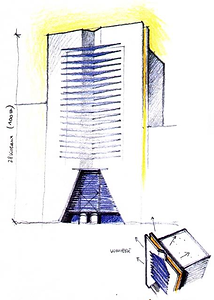


Are we really talking about video game concept art—or architectural drawings? When the game artist becomes an architect, or vice versa!
The Cars: The Stars of Felony Pursuit
The gameplay of Felony Pursuit leans more toward a driving simulation than a traditional arcade racing game. The handling, visual design, and physics of the vehicles were intended to be as realistic as possible. With this in mind, the developers created fictional car manufacturers, complete with custom logos, distinct market positioning within Hudson Key, and uniquely designed models. Here they are:
Simon Caby: « A friend of mine, who was in charge of developing the car tool, and I both had rally driver training; we knew how to slide a 4x4 or handle a rear-wheel-drive car with counter-steering, we physically understood how cars behave, and we wanted it to be fun and enjoyable to play without being overly complicated. »
-
The fictional brand Hayes Motors Inc., comparable to Ford and Chevrolet in the real world, featured 3 different models ranging from 120 to 200 hp, priced between $17,000 and $25,000;
-
The fictional brand Teshima Industries, similar to Honda and Toyota, offered 3 models ranging from 150 to 250 hp, priced between $40,000 and $50,000;
-
The fictional brand Granit Motoren A.G., inspired by BMW, Audi, and Mercedes-Benz, included 3 models ranging from 250 to 300 hp, priced between $35,000 and $100,000;
-
The fictional brand V² Sporting Co., comparable to TVR, Lotus, and Marcos, featured 3 models ranging from 250 to 480 hp, priced between $65,000 and $100,000;
-
The fictional brand Crimson Ltd., akin to Ferrari, Porsche, and Jaguar, offered 3 models ranging from 330 to 560 hp, priced between $100,000 and $250,000;
-
The fictional brand Maverick Motors Corp., comparable to Lamborghini and McLaren, featured 2 models ranging from 500 to 650 hp, priced above $350,000.
A nod to the codename of Felony Pursuit

Simon Caby: « They had developed fictional car brands—some of them almost came to exist in the years that followed. The automotive designers had all attended the same schools, so they shared the same vision of the industry... »
One thing I want, to drive it

In addition, each brand features five categories of vehicles: sports cars, roadsters, GTs, supercars, and SUVs. With the money earned at the end of each mission, players could customize their ride to their liking, using both visual and performance-enhancing upgrades such as spoilers, wheels, body kits, and more. This system would significantly extend the game’s lifespan—especially for fans of virtual tuning!
Although it’s fun to crash into other cars and elements of the environment, collisions damage the vehicle, affect its handling, and compromise its overall performance. As a result, Felony Pursuit demands skillful driving, precise control, and a good sense of distance to avoid mistakes—otherwise, players risk being forced to abandon the chase due to excessive damage sustained by their car. Between drinking and driving, you have to choose!
Polygon Studio’s game offers several camera views tailored to suit all types of players. The interior view impresses with the sensation of speed, as the road rushes beneath the car. The rear camera, on the other hand, is perfect for appreciating the vehicle’s design and style. Finally, the helicopter view evokes the perspective of Grand Theft Auto, bringing a more strategic, top-down feel to the action.
From sporty driving to smooth cruising—even eco-friendly driving—everyone will find a style that suits them; pedal to the metal, engines roaring, tires screeching…
More Car Concepts
With very few in-game screenshots available, the Felony Pursuit car concepts offer a glimpse of what the vehicles would have looked like once modeled in 3D, textured, and rendered on screen. The artworks featured here, created by Reza Bassiri, a trained automotive designer, help bring to life his vision of the shapes and identity of FP’s vehicles.
A car designer, driven by imagination, sketches the curves of future vehicles while taking into account the technical constraints related to their manufacturing and operation. They focus on proportions, shapes, and surfaces, carefully balancing aesthetics with feasibility. Their goal is to create visually appealing models with well-studied aerodynamics, all while staying true to the brand’s identity and spirit.
The automotive designer in charge of Felony Pursuit’s vehicles embarked with Polygon Studio on an extensive research process to imagine cars that were as realistic as possible—while still letting creativity run wild with their visual design!
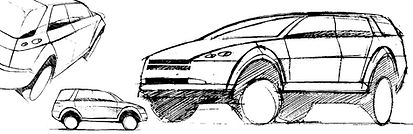




Where does the line lie between designing a car for a video game and one for the real world? In any case, Felony Pursuit clearly pushed beyond it.
The Characters: The Extras of Felony Pursuit
To inject a touch of humor, a warm atmosphere, and a unique tone into Felony Pursuit, the developers planned to include characters that would interact with the player throughout the game—such as during exchanges with the radio operator (accompanied by a clear portrait of the speaker). These characters would also appear in a more parodic way within the menus, each having their own dedicated screen.
The menus in Felony Pursuit each feature a unique background image tied to the current context of the game (police offices, a mafia hideout, the Batcave, the car selection screen, etc.), along with a specific color scheme, a life-sized caricature of the associated character, and the distinct voice of its “owner” announcing the menu’s title. The background visuals would also evolve depending on the player’s progression through the game’s storyline.
The Extras of the Special Vehicles Division:
Richard Cole (the main character / the player): Inexperienced and impulsive, the newcomer to law enforcement will have to prove himself and impress his superiors.
Captain Lisa Stone (Mission Menu): A lieutenant in the SVD, she manages her team with strength and determination, briefing the player at the start of each mission.
Billy Davis (Car Menu): A former racing mechanic, he joined the SVD to drive supercars on open roads, and is responsible for repairing and purchasing vehicles for the highway patrol unit.
Natsumi Takisawa (Save Menu / In-game): The SVD’s secretary and radio operator, she communicates with the player during missions, providing as much information as possible.
Chris McDermott (Options Menu): The officer in charge of the administrative department—and the strictest member of the Special Vehicles Division—allows the player to adjust the game’s settings.
Mason Williams (Mission Results Menu): Constantly glued to his computer and mobile phone, this geek with round glasses evaluates the behavior of officers in the field, working within the SVD’s intelligence department.
The Extras of the Syndicate:
Taylor Price (the main character / the player): Following the death of her father in a car accident caused by the head of the SVD, the Syndicate’s boss raised her as his own daughter.
Alessandro Benedetti (Mission Menu): The Syndicate’s boss, he outlines each mission before his operatives take the wheel to carry them out; cunning and manipulative, he places absolute trust in Taylor, as she is the descendant of a powerful mafia leader.
Eddie Harris (Car Menu): A small-time mechanic, he maintains and regularly renews the Syndicate’s fleet of vehicles, while also providing safehouses for its members.
Mark Russo (Save Menu / In-game): A close friend of the heroine’s father, he watches over her by warning her of dangers on the road via radio, and is widely respected for his driving skills.
Paul Richards (Options Menu): Nicknamed “the snoop,” he knows every rumor in the city—“the walls have ears” truly applies to him—and he authorizes changes to the game’s settings.
Mason Williams (Mission Results Menu): Having infiltrated the SVD’s intelligence service, he operates behind the scenes as a double agent for the Syndicate; his resemblance to John Lennon fools everyone, and the reliability of his mission notification system makes him indispensable to both the police and the mafia.
Common in adventure games but rare in racing titles, the intention to include characters in Felony Pursuit would have set it even further apart from the competition.
The Story: In the Shoes of a Hero or a Villain
Polygon Studio’s game pits the police against the local mafia in high-speed chases worthy of the greatest Hollywood films. In Story Mode, players choose between driving for the law enforcement side—known as the SVD (Special Vehicles Division), a unit specialized in high-speed interventions—or for a criminal organization called the Syndicate. The objective is to climb the ranks and reach the top of the chosen faction’s hierarchy by completing a series of missions.
Some SVD missions include patrolling the city, intercepting illegal street races, protecting armored cash transports, responding to bomb threats and defusing explosives, and escorting an ambulance.
Some Syndicate missions include stealing cars and delivering them to a safehouse, taking part in street races, ambushing cash or prisoner convoys, and escaping after a robbery.
At times, weapons are available during certain missions, though they are not meant to be the core focus of the gameplay. When playing as part of the Special Vehicles Division, if a fugitive causes too much damage and the chase becomes too dangerous for the city’s inhabitants, the player receives a radio call from their superiors authorizing the use of any means necessary to stop them. On the criminal side, when the situation demands it, the mafioso can use a defensive arsenal—such as oil slicks or grenades—to slow down pursuing forces.
A day in the shoes of a gangster

A radio operator provides real-time updates on the progress of the current mission. They regularly relay the position of the target driver to be apprehended—or the proximity of pursuing police units to evade—depending on the player’s location within Hudson Key. They also report traffic accidents, specifying their exact locations, and pass along orders issued to the team by Lisa Stone or Taylor Price.
Certain major events would have an impact on the entire city. For example, the citizens of Hudson Key might either flock en masse to the Downtown stadium or stay home to watch a major sporting event on television. As a result, the city’s avenues would remain deserted for several hours. The mafia would then strike just before the end of the match, hoping to take advantage of the chaos caused by hysterical fans flooding the streets to celebrate their team’s victory. Their behavior would lead to unprecedented traffic jams, leaving the police overwhelmed and unable to respond effectively. Criminals have a knack for running law enforcement ragged!
They enforce the law in Hudson Key

Taking part in high-speed chases from different perspectives—sometimes as the villains, sometimes as the heroes—offers two radically different ways to play Felony Pursuit. Clever!
Its Scoring System and Progression Curve
At the end of each mission, a success rating is automatically awarded as a percentage, based on the chosen faction and the following criteria: elapsed time, damage caused to the city (as much as possible when you play as the Syndicate and as little as possible when you play as the SVD), damage sustained by the player’s vehicle (as little as possible), damage inflicted on civilians’ vehicles (following the same principle as for the city), and—if there are multiple sub-objectives—the degree to which they have been completed.
The city of Felony Pursuit

The player earns money, gains greater freedom of action, and strengthens their authority within their organization by climbing the ranks of the SVD or the Syndicate. As they progress, they unlock more powerful cars to purchase, receive increasingly dangerous missions from their superiors, and—when playing as a criminal—gain access to new hideouts. Advancement is granted after every set of five missions, provided the average score reaches a satisfactory success percentage. The required performance threshold for promotion increases exponentially over the course of the player’s career. Upon their third promotion, they are awarded the ultimate title of Godfather or Chief Commissioner. Their peers will then praise the bravery they have demonstrated throughout the Felony Pursuit “storyline”.
Richard Cole will command additional police units as he rises through the ranks of the SVD. He will order his subordinates to set up a roadblock 300 meters ahead of his position, box in the suspect using a diamond formation to ram and slow them down, deploy spike strips near the target’s location, and even engage a helicopter in the pursuit. Air support, however, can lose sight of the suspect if they pass under a bridge. These interventions come at a cost, reducing both the player’s funds and the final mission rating. On the Syndicate side, Taylor Price gains access to new hideouts to evade law enforcement or repair his vehicle. Be careful—if the police discover a hideout, it will be shut down for several turns/missions.
There is a bonus to unlock—the ultimate rank in Hudson Key—by achieving a 95% success rate during the final set of missions for either the SVD or the Syndicate. The player then dons the role of a superhero, taking the wheel of their own “Batmobile” to protect the city from criminals—even if it means interfering with police operations. From that point on, there are no rules to follow. The only concern is to avoid being caught by either the mafia or the police, and to ensure that their true identity remains a secret!
Its DC Comics-style story mode, a wild idea from the developers! What kind of look did the automotive designer have in mind for the Hudsonmobile? We want to see it!
I would like to thank Terry Proto, Jean-Charles Perrier, Simon Caby, and Jérôme Hoibian for their availability, their kindness, and for providing us with conceptual material. Their insights bring new information to light about Felony Pursuit on the Dreamcast—an unreleased title largely unknown to SEGA fans!
I would like to thank the entire team at Polygon Studio involved in their various projects, including Felony Pursuit on the Sega Dreamcast (Mobygames of Zoombinis: Mountain Rescue).
Special thanks to :
-
Hicks for proof-reading, rewording and editing the text
-
Vince for the English correction of the article
-
Benedikt Scheffer for designing the cover
