


The List of Video Game Source Codes, Libraries and Development Tools
Source code refers to the complete set of instructions written by a developer to create software or a video game. It is the original, human-readable form of a program before it is compiled to run on a console, computer, or any other computing device.
Accessing the source code makes it easier to explore how a program works, modify it, or restore a video game—especially in the case of an Unreleased title—and helps ensure its preservation. Throughout video game history, many source codes have unfortunately been lost and are yet to be recovered.
This page lists various source codes for tools, development libraries, and video games, always keeping the Dreamcast at the center of attention!
Proof-of-Concept Projects on Dreamcast

This project, developed on a Katana development kit in 2000, is an unofficial adaptation of Doom for the Sega Dreamcast, created as a proof of concept. Designed as a programming exercise by a developer at the dawn of the new millennium, it offers a glimpse of the game running on SEGA's last console. The source code includes elements related to an online mode to be restored, as well as features linked to the memory card.
%20Dreamcast.jpg)
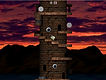
"Nebulus is a critically acclaimed platformer from the late 1980s, particularly known for its Commodore 64 version. The game was ported to almost every 8-bit console under different names depending on the platform or region, such as Castelian on the Nintendo NES or Game Boy. This Dreamcast port of Nebulus Spectrum, developed in 2000 on a Katana development kit as a native programming exercise, contains only a single level and has no audio. Thanks to its source code and a prototype including a level editor, with some work and community help, it could be possible to complete this unfinished project.
The Unreleased Games

Kâar Online, an unreleased PC game, is an online role-playing strategy game set in a fantasy universe. Players control a main character from one of three available races: the Nomaregs, the Uergs, or Humans. Beyond managing and developing their character, players can influence the world of Kâar: command secondary characters, acquire land, and build and manage villages. After a year of development and a demo shown at the Milia 2000 trade show, the MMO was cancelled. With enough work, the source code could solve the issues present in the prototype, which currently does not function.

Despite receiving poor reviews and experiencing disappointing sales, Broadsword Interactive wanted to develop a full franchise around the concept of historical car racing. Several sequels were planned but never completed, including Spirit of Speed 1957, Spirit of Speed 2012, and Spirit of Speed 2002. The source code for Spirit of Speed 2002 was successfully compiled into an executable (.EXE) by LemonHaze, but some assets appear to be missing, preventing the game from starting.
Dreamcast and Multi-Platform Projects

MoHo is a game developed by Lost Toys and published by Take 2 Interactive in 2000. It was released on Dreamcast, PC, and PlayStation 1. The development studio Broadsword Interactive Games is credited for its involvement on certain websites and within the source code. It is likely that Broadsword primarily worked on the coding, while Lost Toys oversaw the artistic aspects and content.

Spirit of Speed, developed by Broadsword Interactive, lets players drive 15 legendary cars from the early days of motor racing, including some of the first twin-supercharged vehicles, like the Alfa Romeo P3. The game features multiple modes and nine iconic tracks, including Roosevelt Raceway and Montana. Originally released in 1999 on PC and published by Hasbro Interactive, a Dreamcast version followed in 2000, distributed by Acclaim Entertainment. The SOS 1937 source code opens the door to modding projects.
Pocket PC Projects That Could Be Ported to Dreamcast
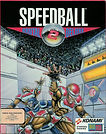
Between 1990 and 1991, the Bitmap Brothers established themselves as a leading studio on Atari and Amiga with the Speedball franchise, two futuristic sports games combining handball and rugby. These titles were highly successful and were later ported to home computers and consoles. This source code reveals that Broadsword Interactive Limited planned to adapt Speedball 2 for handheld PC consoles (Pocket PC) in the early 2000s.

In the 1990s, Electronic Arts developed Extreme Pinball, an original pinball game featuring four distinct tables: Medieval Knights, Rock Fantasy, Urban Chaos, and Monkey Mayhem. Initially released on DOS, it was later ported to the PlayStation 1 with limited success. The source code available here likely corresponds to an Unreleased version intended for handheld PC consoles (Pocket PC).
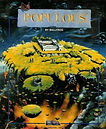
Populous, a strategy game conceived by Peter Molyneux in the late 1980s, is considered the first 'God Game.' Developed by Bullfrog and published by Electronic Arts, it was released in 1989 on the Amiga and Atari ST. Thanks to its critical and commercial success, the game was later ported to other platforms such as the Super Nintendo and Sega Mega Drive. A Pocket PC version appears to have been planned in the early 2000s by Broadsword Interactive Limited but was cancelled for unknown reasons. The source code could make it possible to port the game to Dreamcast by adapting the control scheme for the console's keyboard and mouse.
The list of video game or development library source codes
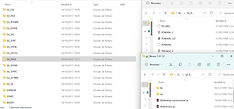
The Shinobi library is an API for the Dreamcast similar to Kamui but with a higher level of abstraction. It is designed to simplify game development, particularly for 2D graphics and multimedia management. This archive therefore includes its source code.

Kamui is an official graphics library for the Dreamcast, handling 3D rendering (polygons, textures, transparency) on the console’s PowerVR GPU. This archive therefore includes its source code to better understand how it works.

This archive contains a mix of documentation and source code for the Dreamcast Katana SDKs (SET 2 / SET 4), as well as several functional tech demos using the Kamui Wrapper, specifically designed for the Scud Race Dreamcast tech demo (SET 2).
Projects on PlayStation, Nintendo and Microsoft Consoles

UEFA Striker on PlayStation is a football game where players can take control of over 130 clubs and national teams across nine game modes. Whether in official or custom competitions, the goal is simple: win. The source code appears partially incomplete and cannot be run directly. However, it does include several debugging symbols for different platforms (PC, Dreamcast, and PSX).
Inspire the community by improving these games, fixing them, modding them, and why not even porting them to Dreamcast!
Special Thanks to:
-
Lemon Haze from the Shenmue: Dragon Phoenix Collection project for making the source codes available on GitHub
