


Name: Rez
Platform: Dreamcast
Publisher: SEGA
Developer: United Game Artists
Genre: Musical / Rail Shooter
Status: Released
Release (Planned): 2001-11-22
Playable Prototype: Yes
Prototype Archived: 1 (GDI)
Build Date: Jul 2 2001, 09:30
Build Type: Mid Prototype
Build Features: Unused Music
CATEGORIES
Rez Dreamcast: The Undercover Build!
Released in 2001 on Dreamcast and PlayStation 2, Rez is an experimental musical game developed by United Game Artists under the supervision of SEGA. It is arguably the most personal work of its creator, Tetsuya Mizuguchi, following his first foray into rhythm games with Space Channel 5 on Dreamcast.
Jake Kazdal (Graphic Artists): « I'll meet people all the time that when, when they hear that I worked on Rez, they're just like, mystified. They're like, Oh, my God, that's like, one of my favorite games of all time. Like, I love that game so much. I've played it so many times. »
Over the years, the game has achieved cult status thanks to its bold art direction, but above all to its unique concept combining shoot ’em up gameplay with electronic music. It is therefore hardly surprising that Rez has been re-released regularly, sometimes in high definition, on modern consoles.
Jake Kazdal: « You know, it didn't sell well at first. I was kind of surprised by that, because I thought it was a really cool game. But like you said, over time, it became a real a real hit. »
In Rez, the player takes on the role of a virtual entity traveling through a vast computer network. The concept is simple yet remarkably effective: target and destroy enemies in sync with the music. Every action, whether firing or locking onto a target, as well as every on-screen event, particularly explosions, generates sounds that are layered onto the game’s techno-electronic soundtrack. This extraordinary aspect, at the heart of United Game Artists’ vision, makes you feel as though you are conducting the music and shaping it in real time like a composer.
To achieve such a result, Tetsuya Mizuguchi drew inspiration from the concept of synesthesia as expressed in the works of Wassily Kandinsky: the fusion of the senses. The Russian painter associated colors, shapes, and sounds to create highly expressive and emotionally charged paintings.
Don’t forget to show the European cover of Rez Dreamcast
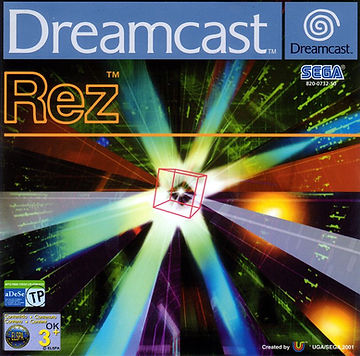
Jake Kazdal: « We were kind of just trying different things and looking at different things. The lead artist, Kazdal Yokota, is an amazing artist, so it was really interesting. And the whole art team was just like amazingly talented. »
On the main page, [Rez Dreamcast, Its Prototypes and Internal Mini-VHS: When Psychedelic Gaming Came to Consoles], Jake Kazdal and Cord Smith share their memories of the game’s development.
Rez isn’t just played—it’s felt!
The July 2, 2001 Rez Dreamcast Prototype
Analysis of the prototype indicates that this Rez Dreamcast beta dates from July 2, 2001, at 09:54:04, or more precisely from version 0.10, build #876, compiled on 07/02/2001 at 09:30 according to the BUILD.DAT file. It therefore predates the final Japanese version, released on October 4, 2001, by approximately four months. This intermediate build is quite close to the version presented by Tetsuya Mizuguchi at the event held at Shibuya AX, just five days after this public demonstration in Tokyo. Despite numerous differences, the art direction and the project’s overall foundations were already clearly established.
The prototype’s Main Menu, ready to pulse to the sound of Underworld
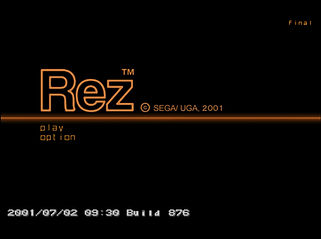
Beyond its value for studying the development of Rez, this prototype also allows players to experience levels 2, 3, and 4 accompanied by Cowgirl/Nuxx by Underworld. However, the British group would ultimately be absent from the final lineup.
The developers disabled the Debug Menu when the confidential red GD-R was burned. A section of the main page dedicated to the behind-the-scenes development of this musical shoot ’em up and its prototypes explains how to access it and how it works. The flags (binary values) associated with this feature are located at address 0x8C293278: by changing byte 2 from “05” to “C5”, the Debug Menu becomes accessible.
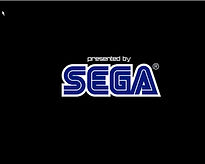
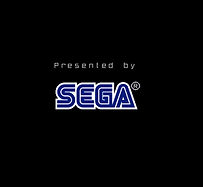
This Rez Dreamcast build 876 does not yet feature the epilepsy warning screen shown before reaching the title screen. The SEGA and United Game Artists logos also differ from those in the final version, both in size and in subtler details such as their colors.
The orange outline around the Rez lettering on the title screen and in the Main Menu appears duller here. The developers would later give it a brighter, more vivid appearance. Likewise, the orange gradient beneath the United Game Artists logo would eventually be replaced by a simple, solid orange line on a plain background.
When returning to the title screen or the Options Menu from the Tutorial, several glitches can occur. The title animation then plays incorrectly: some elements appear excessively transparent, while the 3D models are rendered without culling (an optimization technique that avoids processing and displaying objects that are invisible to the camera). The issue disappears automatically after entering the level selection menu (PLAY).
The Menus
Once in the Options Menu, the screen strangely shakes from side to side. This movement occurs every time the cursor is moved up or down while selecting a setting. The United Game Artists team would remove this effect as development on Rez progressed. The default settings in this menu also differ from those in the final version: the sound mode is set to mono instead of stereo, while the BGM and SFX volume levels are set to 3 rather than 4.
The level selector does not yet display the names of the artists or the tracks associated with the game’s five maps, unlike the final version of Rez. In addition, the orange cube highlighting the selected level is noticeably larger here: slightly wider, it extends a few millimeters beyond the one seen in the final version.
The level selector (Beta on the left, final version on the right)
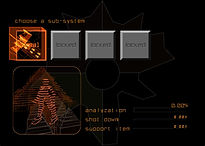

In this Rez prototype, the Menu that would later become Score Attack still uses provisional labels: Score Attack – Japanese, Score Attack En – English, Score Attack Ge – German, Score Attack Fr – French, Score Attack Sp – Spanish, and Score Attack It – Italian. These are placeholders that change depending on the selected language. It is also worth noting the use of “highscore”, written as a single word here, which would become two words (“high score”) in the GOLD version of the game. The layout of this Menu is also still provisional: the background of the AREA section, the separator line used to structure the elements on screen, the font size… All these graphic details, however minor, would be refined in subsequent builds.
Several pieces of information displayed in the Beyond Menu, which is only partially translated into English at this stage, would be changed for greater linguistic consistency: “Beyond mode option” would become “Beyond mode options”, “Beyond modes” would become “Beyond mode”, “Trancemission” would be split into two words as “Trance mission”, the artist “Markus Popp” would be identified by the name of his group, “Oval”, “Player choose” would be corrected to “Player select”, and “Morolian special” would become “Morolian’s beam”.
Score Attack En Menu

Still with the aim of standardizing the English interface, the Pause Menu would undergo several adjustments leading up to the game’s release on November 22, 2001, even though the confirmation message for quitting a game is still written in Japanese. The hyphen is missing from “log out” (which would become “log-out”), as are the spaces in “up/down” (changed to “up / down” in the final version). The “BGM.vol” option (changed to “BGM vol.” in the final version) and “sound effects.vol” (changed to “sound effect vol.”) also have the punctuation mark in the wrong place. Finally, this prototype does not yet include the option to enable or disable the vibration pack.
Gameplay
The humanoid form of Rez does not yet have its own shooting sound effect. Its projectiles use a generic sound effect, with no distinction tied to this evolution. The same applies to the Morolian form, a secret avatar that could only be unlocked in the Japanese version of the game by having a Space Channel 5 save file. In addition, this appearance does not yet feature the distinctive laser that would later be assigned to it.
The SEGA logo (prototype on the left, final version on the right)
.jpg)
Enemies are noticeably more aggressive in build 876. Their spawn timings are not yet properly fine-tuned, resulting in some of the main events unfolding too quickly. Certain enemies can therefore appear prematurely during transitions between stages. This still-imperfect tuning makes the game more difficult than the final version and, in some situations, makes achieving 100% destruction impossible.
Highlighted objects are automatically drawn toward the player. This distracting behavior clutters the screen and makes the action harder to follow.
The looping music does not stop properly during transitions between the different areas. The transition screens display the text “Layer Level XX”, whose typography varies from one version to another.
AREA 1
The level features an early version of Buggie Running Beeps by Keiichi Sugiyama. It is built around several MIDI tracks and instrumental arrangements inspired by Underworld tracks, notably Cowgirl and Born Slippy .NUXX.
Only in this level, the prototype assigns the shooting sound effects from Form 2 of the final version to Form 1. Form 2 uses those from Form 4, while Form 3 features effects very similar to those used by Form 5 in the GOLD version.
The second phase of the Earth boss ends more quickly than intended in this beta. On the highest difficulty level (Tera), it has only one protective ring, whereas it should normally be surrounded by two. This difference reduces its durability and noticeably speeds up the pace of the fight.
The Easter egg featuring Earth’s smiling face, intended for the Morolian form, is not yet naturally integrated into this Rez 876 build. The only way to see it is to reach the boss after enabling KODE mode through the Debug Menu.
AREA 2
The musical tempo reaches 128 beats per minute (BPM), a relatively slow pace that makes AREA 2 more difficult to complete than usual. It increases to 140 BPM when the boss appears, intensifying the action, while the final version adopts a constant tempo of 145 BPM throughout the level.
Some enemies are more resilient than usual and require more shots to be destroyed.
The walls with eight hit points during the first phase of the Mars boss must be destroyed one by one. It is not yet possible to target them simultaneously.
AREA 3
Each type of enemy does not yet have its own destruction sound effect.
The enemy placement in the level differs slightly from the final version, making them more aggressive.
The Venus boss appears more aggressive during its final phase, immediately launching missiles from its pillar instead of waiting before attacking.
AREA 5
The level now begins with an additional music track, the “Killer” sample, already playing. In the final version, this track does not start until later.
Enemy placement is denser in certain sections, with no enemies yet positioned behind the Gates of Truth. This configuration makes the level noticeably more difficult than in the final version.
After the large pillar-shaped enemy, some enemies appear just as the player reaches the layer transition. They become impossible to destroy...
When all of the pillar enemy’s missiles self-destruct simultaneously, the audio queue briefly becomes overloaded, causing the music to fall out of sync.
AREA 6
The character reaches its final form as soon as the level begins, unlike the final version, where this transformation occurs at the end of the AREA 5 cutscene.
When one of the first four bosses is destroyed, no item appears. In addition, its core flies toward the next room instead of remaining stationary before gradually disappearing.
ENDING
The good ending cutscene, still unfinished at this stage, takes place against a completely black background. Regardless of the player’s score or performance, the prototype does not spawn any butterflies when Eden brings its hands together to create one.
The bad ending cutscene is also only partially implemented. If the player dies during the battle to save Eden, it disintegrates and the background becomes completely dark. Instead of displaying the bad ending credits, the game immediately proceeds to those of the good ending described above.
Strangely, throughout this sequence, the word “Ending” remains displayed in the center of the screen. No credits roll, and no message appears to mark the end of the adventure. Finally, the scene does not end automatically: the player must press the A button or Start to continue.
The game returns directly to the “Segalogo” module instead of transitioning to the results screen.
LOST AREA
This level plays without music, even though “Ebz” is already listed as the artist of its associated track. The same applies to the TRANCE MISSION map, which credits “Markus Popp” (aka Oval) as the artist of the track that would eventually be assigned to it.
The tempo is set to 129 BPM, compared to 120 BPM in the final version.
The fog has a reddish tint here, whereas it would become more greenish in later builds.
The build features enemy formations that were later abandoned in subsequent revisions of Rez.
When all of the pillar enemy’s missiles self-destruct simultaneously, the audio queue briefly becomes overloaded, causing the music to fall out of sync.
As was already the case with the Space Channel 5 Alpha on Dreamcast, dissecting and documenting rhythm games such as Rez is particularly challenging, especially when it comes to illustrating their differences through screenshots.
.jpg)
You can download this build of Rez Dreamcast below :
Acknowledgments:
-
to Joris "CDi" Lelong for proofreading and correcting the French text
-
to Woof for the English translation of the article
-
to Woof for investigating the Rez Dreamcast prototype and helping analyze it
Really special prototypes (big differences, early Builds, weird ones, etc.): Guilty Gear X (DC) - Dead or Alive 2 (DC) - Samba De Amigo (DC) - Virtual-On Oratorio Tangram (DC) - Spirit of Speed 1937 (DC) - Re-Volt (DC) - Phantasy Star Online (DC) - San Francisco Rush 2049 (DC) - Evil Twin: Cyprien's Chronicles (DC) - Toy Racer (DC) - Space Channel 5 (DC) - Sega Smash Pack Vol.1 (DC) - Red Dog (DC) - Propeller Arena (DC) - Half-Life (DC) - Jet Set Radio (DC) - Daytona USA 2001 (DC) - Floigan Bros. Episode 1 (DC) - NBA 2K1 (DC) - NFL 2K1 (DC) - NHL 2K (DC) - World Serie Baseball 2K2 (DC) - Rez The Fatboy Slim Build (DC) - Rez The Undercower Build (DC)
More than 300 prototypes have been digitized. You will find them available for free download in the section: [Dreamcast prototypes (and more) available for download]
