


Ring: The Legend of the Nibelungs – The Lost Dreamcast Prototype Unearthed
A video game inspired by a Wagner opera? In the late 1990s, a French-Italian-Slovenian studio took on that ambitious challenge by creating Ring: The Legend of the Nibelungs, a Myst-style adventure game released for PC and planned for the Dreamcast (though ultimately Unreleased on the platform). The premise may sound surprising, but beneath the composer's operas lies a rich tapestry of Germanic and Norse mythology, material perfectly suited to interactive storytelling.
Guillaume de Fondaumière (Executive Producers): « I'm very proud of Ring. It was a rather crazy gamble for its time, and an incredible collaboration with Druillet! »
The Der Ring des Nibelungen tetralogy by Richard Wagner, which inspired the game, is something everyone should experience at least once in their lifetime. Through this monumental cycle, the German composer created a richly detailed operatic universe filled with legends surrounding a cursed ring and its role in the conflicts between gods and mortals. Both Wagner and Tolkien (The Lord of the Rings) drew upon the same Germanic and Norse mythological traditions to tell the story of a treasure whose possession inevitably leads to ruin and chaos.
The unofficial trailer for version of Ring: The Legend of the Nibelungenn Dreamcast
Stephen Carrière (Game Designed by): « The classical music world loves seeing young people take an interest. We were truly passionate. We listened to a great deal of classical music. Creating a straightforward heroic fantasy tale around the cursed ring was simply out of the question—we had immense respect for Wagner's original work »
In Ring for PC and Dreamcast, players are introduced to a sci-fi reinterpretation of the medieval Nibelungen epic, bringing the legendary cursed ring to life through a distinctly Wagnerian aesthetic.. The Dreamcast prototype featured in this article offers a glimpse of a fascinating game that explores the darker aspects of human nature through its narrative. The testimonies of Stephen Carrière, Nicolas Frutus, and Guillaume de Fondaumière—key members of Arxel Tribe (many thanks to them)—also lift the curtain on the game's development.
Ring: The Legend of the Nibelungs remains a truly unique work, a video game curiosity that stands as a heartfelt tribute to Wagner's visionary universe.
Ring: A Lyrical Epic
Developed by Arxel Tribe (formerly Art Rebel) and published by Cryo Interactive, Ring: The Legend of the Nibelungen was released for PC in 1998, at the height of the Point-and-Click adventure game era. This ambitious project blends a Nordic atmosphere, operatic culture, visual arts, and interactive storytelling. The result is an experience of almost poetic immersion, making Ring a memorable success. Critics praised the game despite a few rough edges.
Stephen Carrière: « It was completely crazy and incredibly risky, which is why so many people were eager to join us. Universal gave us access to Solti's absolutely magnificent recording. Even the Wagner Society—the self-appointed Guardians of the Temple—congratulated us on our work. »
Arxel Tribe and Its Love for Wagner

The game's success on PC—selling 450,000 copies across 47 countries—prompted Cryo to consider a Dreamcast port for SEGA's latest console, whose architecture was particularly well suited to PC conversions. Unfortunately, the console version never progressed beyond the Alpha stage. Considered too risky, it was ultimately cancelled following the Dreamcast's disappointing commercial performance. Although Cryo ended up releasing nothing for the "White Lady", the publisher clearly believed in the console's potential, as demonstrated by the recent discoveries of the Dreamcast prototypes Millennium Racer: Y2K Fighters, Jekyll and Hyde, and Ring: The Legend of the Nibelungs—all Unreleased Cryo titles.
Guillaume de Fondaumière: « That's right, a Dreamcast version was originally planned after the PC release. Unfortunately, Cryo eventually cancelled it. A real shame—I personally loved the console. It was ahead of its time, but its lifespan was far too short! »
Despite its flaws, the game shines through its many strengths: Philippe Druillet's extraordinary Artwork, Charlotte Rampling's mesmerizing performance as Erda, and the magnificent soundtrack performed by the Vienna Philharmonic under the baton of Sir Georg Solti. A masterpiece within a masterpiece.
Stephen Carrière: « It all came down to meeting the right people. We'd worked with Moebius on Pilgrim, and we were eager to collaborate with Druillet. When we visited his studio, he showed us all the Artwork he had created for the Paris Opera, and we immediately thought, 'This is absolutely incredible. »
The Ring: The Legend of the Nibelungen video game saga, a space opera created by Arxel Tribe, transports players to a distant future in which Earth has vanished. Four great powers rule the universe through endless tyranny, enslaving humanity and forcing people to endlessly reenact fragments of Earth's long-lost culture. The player's objective is to reassemble the Ring of the Nibelungen.
No one should be surprised to learn that, by the dawn of the fourth millennium, Earth no longer exists. In a universe ruled by slavery, the last survivors of humanity bargain for their freedom with their most precious possession: Art.
Upon the remnants of Earth, now transformed into a galactic stage, a young man is ordered by the Tyranny to produce the ultimate performance of one of the greatest treasures of this lost civilization: Richard Wagner's opera cycle, The Ring of the Nibelung.
Is it a quest to save humanity or merely part of a far-reaching conspiracy?
Druillet's original artwork, followed by Nicolas Fructus' color rendition (the character Donner)


To adapt Wagner's work into a video game, the developers reworked several aspects of its narrative. Rather than producing a faithful retelling, they set out to create a futuristic reinterpretation of the Ring saga: Wotan becomes a cybernetic being, the giants are transformed into missile-equipped robots, and Alberich travels across land and sea on a motorcycle or a robotic surfboard. To ensure the experience felt like a genuine video game rather than an interactive movie, Arxel Tribe also restructured parts of the story to create engaging gameplay and maintain a steady pace, notably by introducing puzzles and environmental challenges for players to solve.
Alberich, the Terror of Mime

The Rhine Maidens Will Seduce Alberich

Different Stages in the Modeling of One of the Giants: Fasolt or Fafner?

Stephen Carrière: « The adaptation itself isn't particularly difficult. The real challenge is figuring out how to translate it into the gameplay of a puzzle-based adventure game in a way that conveys something meaningful without becoming tedious for the player. It's really about designing the puzzles and finding gameplay mechanics that make the player's progression feel both engaging and rewarding. »
Ring is played from a first-person perspective. Players navigate by moving the cursor across pre-rendered environments with full 360-degree views. The cursor changes to indicate available interactions, while the right mouse button opens the inventory and the Options Menu. Movement is grid-based, much like Myst, with cinematic transitions between locations. Puzzles are woven throughout the adventure, and even the smallest mistake can prove fatal, making caution—and frequent saving—essential.
Visually, the game is striking. Powered by Arxel Tribe's in-house 3D engine, its meticulously crafted presentation reflects a genuine artistic ambition. Players unfamiliar with—or indifferent to—the Métal Hurlant ("Heavy Metal") aesthetic may find it quite a shock, but that's ultimately part of its appeal. To provoke, challenge, and captivate its audience is precisely what Wagner sought to achieve with his operas.
At the crossroads of video games, opera, and comic art, Ring remains a symbol of an era when games aspired above all to inspire wonder and push the boundaries of innovation.
The Story of the Ring of the Nibelungs, as Told by Arxel Tribe
Players assume the role of Ish, one of the last survivors from Earth. Guided by his mother, who serves as the game's narrator, he is drawn into the medieval legend of the Ring of the Nibelungen to uncover the mystery behind humanity's tragic downfall and, perhaps, save the world.
After an introductory sequence lasting more than three minutes, Ish awakens in a lunar landscape on what appears to be an asteroid. There stand the statues of the sadistic dwarf Alberich, Loge the spirit of fire, Siegmund the half-man and half-wolf son of Wotan and finally Brünnhilde the Valkyrie. Towering above them are Wotan, the ruler of the gods, and the giants Fasolt and Fafner.
To fulfill his destiny, Ish's spirit successively inhabits the four central protagonists of the saga, allowing him to relive the epic of the Ring from within and experience its story firsthand.
The Opening Cinematic (Dreamcast)
As Alberich: He returns to the mine overseen by his brother Mime during his absence, only to discover that the Nibelungen workers have gone on strike, bringing production to a halt. Determined to forge the Ring—a source of power capable of rivaling that of the gods—Alberich seizes the Rhinegold, forces the dwarves back to work, and restores the forge to full operation.
From Freia's Concept to Her In-Game Model


As Loge: The giants Fasolt and Fafner demand Freia, guardian of the gods' immortality, as payment for building their magnificent palace. Wotan, ruler of the gods, agrees to their demand. Loge, the cunning spirit of fire, then proposes offering Alberich's Ring in exchange for Freia. Acting on Wotan's behalf, he ventures into the dwarf's mine to seize the treasure and confront its owner.
As Siegmund: He investigates the tragic circumstances surrounding the deaths of his twin sister Sieglinde and their mother, Fricka. Venturing into the forest, he comes face to face with Hunding, the husband of his late sister.
As Brünnhilde: The half-sister of Siegmund, she saves him during a decisive battle. Enraged by her defiance, Wotan banishes her to Valhalla. Determined to redeem herself, Brünnhilde sets out in search of the magical artifacts needed to complete the Ring cycle, hoping to restore humanity and reconcile mankind with the god whose jealousy of her Valkyrie powers led to her exile.
By the end of this odyssey, the player is pursuing more than humanity's redemption—they are taking part in an eternal quest for meaning, where power, love, and sacrifice are inextricably intertwined.
Arxel Tribe: Forging a Studio and a Game
In the 1990s, Slovenia broke away from the former Yugoslavia and embarked on its path to independence. In this newly established Balkan nation—the only one to emerge largely unscathed by the wars of the Yugoslav breakup—Croatian architect Diego Zanco and Slovenian architect Matjaž Pozlep founded a company called Art Rebel, which would later be renamed Arxel Tribe. The studio invested heavily in cutting-edge technology, acquiring state-of-the-art equipment such as powerful Unix workstations, making it one of the few European companies to own such advanced systems at the time.
Nicolas Fructus (Art Director): « Back then, they used to boast that only Spielberg and his company, ILM (Industrial Light & Magic), had machines like these, and that there were virtually none in France—except perhaps in a handful of video post-production studios. For 3D modeling, it was almost unheard of at the time. »
The Music Video for Laibach's "Final Countdown"
Arxel Tribe soon specialized in 3D computer graphics and CGI, particularly for the advertising industry. Diego Zanco and Matjaž Pozlep secured prestigious contracts in automotive design, working with Ferrari and Bertone, as well as in multimedia for L'Oréal. Building on these high-profile Italian clients, they opened a second office in Milan. In its early years, the company also produced the music video for Final Countdown by the Slovenian industrial band Laibach, whose work would later influence Rammstein. Arxel Tribe also applied its expertise to institutional productions before turning to video game development almost by chance. At the time, the future looked exceptionally promising.
Guillaume de Fondaumière: « I have countless memories of Matjaž Pozlep, Diego Zanco, Stephen Carrière, and the entire team... If I had to pick just one, it would be a company retreat with everyone from our Paris, Milan, and Ljubljana offices. Diego had a surprise waiting for us as soon as we got off the plane: a 2,000-meter tandem paragliding descent, followed by an 80-meter bungee jump from a bridge. Nothing brings a team together quite like a healthy dose of adrenaline! »
During the same decade, Arxel Tribe welcomed two young business school interns: Guillaume de Fondaumière and Stephen Carrière. At the end of their internship, they proposed creating a French division dedicated to video game development. Seeing an opportunity to diversify the company's activities, the two founders enthusiastically approved the project.
Guillaume de Fondaumière: « Arxel is a contraction of 'Art' and 'Pixel',reflecting the studio's origins as a 3D graphics company (1992–1995). The team was young, incredibly close-knit, and we practically lived together—including spending many of our vacations together. We were a real tribe. Hence the name 'Tribe'. »
A Sketch of Pilgrim
Stephen Carrière proposed setting the studio apart by adapting literary works into video games. His mother, Anne Carrière, managed the rights to the novel The Pilgrimage (Le Pèlerin de Compostelle), which would loosely inspire the studio's first game, Pilgrim: Faith as a Weapon.
Stephen Carrière: « The idea behind moving into mainstream multimedia content was to seize the opportunity that had opened up and to believe there was room for video games with a genuine literary—or, more broadly, cultural—dimension. »

Once the rights to Paulo Coelho's novel had been secured, Arxel Tribe's French division recruited a diverse team of talent, including Nicolas Fructus, who would go on to become the studio's Art Director. Supervised by Infogrames, development began in 1996 with a budget of approximately €400,000. Jean Giraud—better known as Moebius, the legendary creator of the Blueberry western comic series—lent his support to the project and designed several of its characters. Released in 1997, Pilgrim: Faith as a Weapon was a Point-and-Click that established the genre as the studio's trademark. The game went on to sell 250,000 copies.
The Banquet Hall's Evolution: From Concept Art to the First In-Game Render (Pilgrim)


Nicolas Fructus: « Since Moebius had illustrated a special edition of The Alchemist, they figured that pairing Coelho and Moebius would help sell the game. In reality, though, he barely worked on it—it was essentially a name buy, a way of acquiring a famous name to give the project more weight. »
Pilgrim laid the foundations of Arxel Tribe's creative philosophy: developing video games inspired by major cultural works, presented in the pure tradition of Point-and-Click adventures with pre-rendered environments. One of the studio's next titles, Faust (Faust: Seven Games of the Soul in North America), would draw its inspiration from Goethe's celebrated play.
Santiago de Compostela in Pilgrim (Artwork by Moebius)

Stephen Carrière : « We embraced the Point-and-Click genre right from the start. We had no experience in game design, but we had talented programmers and outstanding 3D artists. There was no way we were suddenly going to reinvent ourselves as an Action-Adventure studio. We wanted to create something beautiful and meaningful. Myst had shown the way: a poetic, immersive, puzzle-driven Point-and-Click adventure. It was the perfect format for achieving what we wanted to accomplish. »
In 1998, the studio achieved another success with Ring: The Legend of the Nibelungen, its second title. Developed for PC with a budget of around €1 million and published by Cryo Interactive—despite being a direct competitor in the interactive genre—the game marked an important milestone for the company. At the time, Cryo was transitioning from a game developer into a publisher, a shift that would lead to a lasting partnership with Arxel Tribe on titles such as Faust: Seven Games of the Soul (1999), TimeScape: Journey to Pompeii (2000), and Jerusalem: The Three Roads to the Holy Land (2002). Ring was originally slated to be published by Infogrames, but the publisher withdrew after six months, leaving Arxel Tribe in a difficult position—until Cryo stepped in to take over the project.
Stephen Carrière: « At E3, people were intrigued. It was incredibly rewarding to see these 'little Franco-Yugoslavs' come out of nowhere with a project driven by a touch of cultural madness. »
To reinforce the game's identity—as it had previously done with Moebius on Pilgrim—the Arxel Tribe team enlisted comic book artist Philippe Druillet, the creator of Lone Sloane. Before that collaboration, the studio had considered working with Enki Bilal on a video game adaptation of The Carnival of Immortals (La Foire aux immortels).
Nicolas Fructus: « Druillet is someone who loves to share. Once you get the Druillet machine going—once you press the Druillet button—it never stops. He's an absolute powerhouse »
Several Concepts for Ring's Starting Area

Development of Ring spanned two years and involved a team of up to 50 people at its peak. As with all Arxel Tribe productions, pre-production took place in Paris, while the main development was carried out in Slovenia, requiring frequent travel between the two countries to oversee the project.
Stephen Carrière: « I spent half the year in Slovenia. There was no such thing as videoconferencing back then—we communicated by email. Everything simply took longer. »


Druillet's Original Art Board and Its In-Game Recreation (Ring's Starting Area)
At the outset, no one at Arxel Tribe had any experience in video game development—they learned everything on the job. The artists and 3D designers came from backgrounds in advertising, industrial design, and architecture, while the programmers had previously worked in highly technical fields such as finance and banking network security, where they were accustomed to handling extremely complex operating systems.
Nicolas Fructus: « Without the compression technology developed by our programmers, Ring would have filled ten CDs instead of six. Their next challenge was to squeeze everything onto one—or at most two—DVD-ROMs. »
Following Ring, Arxel Tribe cemented its reputation as one of the leading studios in interactive storytelling and narrative-driven games. The company would later venture beyond its signature formula with two more ambitious projects: the RPG Mistmare and the first-person shooter Hannibal, which ultimately remained unfinished. Between 1997 and 2003, the studio released eighteen productions before the Slovenian company was restructured and withdrew from the video game industry altogether. Its French division was sold to an Italian shareholder in 2001. Today, the original company still exists under the name Art Rebel 9, specializing in post-production and advertising.
Guillaume de Fondaumière: « I was the one who signed the licensing agreement for Hannibal with Universal and produced much of the game. We sold Arxel Tribe to CTO S.p.A. in 2001, and unfortunately it was the collapse of the entire Italian group in 2004 that brought about the end of the studio we had founded. Hannibal was already in beta when the company went bankrupt »
Ultimately, Arxel Tribe could not survive the bursting of the dot-com bubble, the rapid democratization of 3D production tools such as Maya—which gradually replaced expensive Silicon Graphics workstations—or the industry's shift toward real-time 3D, a field in which the studio's teams never truly found their footing.
Rare Screenshot of Hannibal (PC)

Nicolas Fructus: « We could see real-time 3D coming. As far as I was concerned, the video game business model was no longer sustainable. I was convinced we needed to pivot toward animated films, following Pixar's early path: make a short film, then another, until eventually achieving a breakthrough like Toy Story. »
Despite its relatively short lifespan, Arxel Tribe left a lasting mark through the visual quality of its productions and its ambition to bring video games closer to the worlds of art and literature.
Philippe Druillet: Master of the Nibelungs
Following the Liberation of France, the young Philippe Druillet fled the country with his parents, who had been sentenced to death in absentia for collaborating with the occupying forces. Taking refuge in Spain, the family lived in fear and exile. Druillet's father died when Philippe was only seven years old. He later returned to Paris with his mother, where he found solace in art and museums. From an early age, he developed a passion for drawing and science fiction. These worlds became a way for him to reinvent himself and distance himself from the burden of his family's past.
Druillet first joined the magazine Pilote before co-founding the publishing house Les Humanoïdes Associés alongside Moebius and Jean-Pierre Dionnet, pioneers of science fiction comics. Together, they launched the legendary magazine Métal Hurlant, which would leave a lasting mark on visual culture around the world. Their work went on to influence Hollywood, leading to numerous collaborations, and its impact can be seen in films such as Alien and Tron. Their visionary style also inspired Team Andromeda, the creators of Panzer Dragoon for the Sega Saturn. Moebius himself even illustrated the game's Japanese cover Artwork.
Official Making-of Video, found on the 'Ring' double sided DVD-ROM edition
Nicolas Fructus: « Druillet is entirely self-taught. He learned to draw on his own, without ever taking formal lessons. He's able to explain things in an extraordinary way because everything he absorbed in order to learn drawing becomes part of the way he teaches and talks about it. His creative thought process is fascinating. He draws the way he draws because there's so much more going on in his mind. He doesn't just draw—he thinks, and he passes that way of thinking on to others. »
An Enduring Love of Opera
In the early 1970s, stage director Humbert Camerlo approached Druillet with a proposal to contribute to a production of Das Rheingold at La Monnaie in Brussels. Camerlo saw in Druillet's Artwork the visual expression of a distinctly Wagnerian spirit. Despite two years of preparation, the ambitious project was ultimately abandoned.
A decade later, the two men happened to meet again by chance in a bar. Camerlo shared with Druillet his vision for a monumental production: Wagner's Ring cycle reimagined as a science fiction epic, designed in collaboration with architect Peter Heiss and staged in a modular, demountable theater. The encounter rekindled the project.
Between 1978 and 1983, Druillet worked on the stage design for this Wagner Space Opera alongside Rolf Liebermann and Humbert Camerlo at the Paris Opera. However, the project ultimately collapsed due to a lack of funding, as public authorities chose instead to finance the construction of the Zénith concert venue. A film adaptation commissioned in parallel by AMLF met the same fate. Druillet's Wagnerian dream was once again left unfulfilled.
After Twenty-Six Years of Waiting
Far from discouraged, Druillet turned his attention to emerging technologies, particularly the early development of 3D computer graphics. In 1990, he collaborated with William Sheller on the music video for Excalibur, an innovative experiment in computer-generated imagery. A few years later, in 1996–1997, the opportunity he had long been waiting for finally arrived: to bring his Wagner Space Opera to life—as a video game.
Nicolas Fructus: « When I graduated in 1991, Druillet was a member of the jury for my class. After moving to Paris, I got back in touch with him to show him my portfolio. At the time, he was working on a 45-minute, 180-degree 3D film for La Géode. The project took shape, but it was ultimately never completed. »
The Excalibur Music Video
After Pilgrim, Arxel Tribe's first game, which had benefited from the support of Moebius, the studio's management began looking for another renowned artist to collaborate on its second project. They approached Philippe Druillet without yet knowing what the game's theme would be. Through their discussions with him, they discovered his long-abandoned Wagner Space Opera—a project he had envisioned more than twenty years earlier but had never been able to bring to fruition. Captivated by the models, sketches, and costume designs he had carefully preserved, the team decided to make them the foundation of their next game, provided Druillet agreed to adapt his theatrical vision to the video game medium.
Nicolas Fructus: « Philippe had already imagined everything: around a hundred preparatory drawings, the main characters, the environments—even six-meter-tall giant robot versions of Fasolt and Fafner that had been designed for the stage! Stephen and I met Druillet over lunch to discuss the project. He pulled out a scale model of the temporary structure he had designed to stage The Ring of the Nibelungen. That's when we thought: 'We've just met the maddest visionary of them all' .We told him: 'Philippe, since we're working in a virtual world, you can design everything at whatever scale you like—we don't have any limits.' »
Ring as a Video Game: The Fulfillment of a Dream
After twenty-six years of waiting, Druillet finally saw his dream reborn in a new form. Enthralled by the creative possibilities of 3D graphics, he agreed to design the visuals for Ring, a loose adaptation of The Ring of the Nibelung. This first experience in the video game industry would later lead him to serve as Art Director on Cryo's Salammbô: Les Périls de Carthage (released as Salammbo: Battle for Carthage in English speaking regions).
Nicolas Fructus: « My role was to adapt Philippe's work for the game while showcasing it as faithfully as possible. Whenever I created an element of the world that he hadn't originally designed, I would show it to him and we'd discuss it together. I'd then refine and adjust it until it matched his style as closely as possible. »
Druillet's Illustration for Ring (The Forest)

Druillet threw himself wholeheartedly into the production, overseeing the artistic direction of the project from beginning to end. After all, Ring was, in many ways, his own creation. He even traveled to Slovenia to meet the development team and share his vision in person. Every two weeks, he would stop by the Paris office carrying new illustrations for the developers—some measuring over a meter in length. These visits gave him the opportunity to review the game's progress and, above all, to explore the possibilities of 3D graphics firsthand. In total, Druillet produced around 120 large-format black-and-white illustrations, which Nicolas Fructus then colored and adapted for use in the game.
Druillet's Original Art Board, Followed by Nicolas Color Version (ERDA's Face in Ring)


Stephen Carrière: « Druillet came to Slovenia to mentor the younger members of the team. He was originally supposed to stay for three weeks (if I remember correctly), but he ended up staying for four. He was even giving them art history lessons! He was absolutely extraordinary. »
Always respectful of other people's work, Druillet proved remarkably flexible, to the point that the Arxel Tribe team often felt he was adapting to them rather than the other way around, as originally planned. Fully aware of the technical limitations of the time, he never demanded the impossible or pressured the team into finding ways to reproduce every detail of his sketches on screen. Those who worked alongside him during the development of Ring remember a man who was passionate, curious, and exceptionally generous. For Druillet, this project was far more than just another video game—it was the fulfillment of a dream born decades earlier, bringing together his lifelong passions for science fiction, Wagner, and 3D computer graphics.
Nicolas Fructus: « Druillet's style is built around sharp angles, triangles, and protruding forms arranged in very frontal compositions. So when I started drawing the characters, I realized that combining his front and profile views inevitably created intermediate curves, giving them a roundness more reminiscent of Enki Bilal's style. The result was quite amusing. Philippe didn't object at all—he simply said: 'Yes, that's perfectly fine'. »
Heir to an imagination without limits, Druillet succeeded in bringing drawing, music, and digital technology into dialogue, all in the service of a single passion: creation.
The Dreamcast Prototype(s): Bringing Point-and-Click to the Spiral Console
Before delving into the details, it's worth noting that assembling all three Dreamcast discs of Ring: The Legend of the Nibelungen took five years. GD-ROM 2 was discovered in 2020, followed by two separate copies of Disc 1 the following year, before the search finally culminated with the discovery of Disc 3 in 2025. As a result, the game's preservation and public release took place in several stages, giving this project a unique history. Now that all three discs have finally been recovered, this long search comes to an end with a great sense of relief. Multiple ISO are now available, allowing players to experience this Unreleased Point-and-Click on the Dreamcast at last.
Examination of the prototype reveals that the developers burned this Dreamcast build on September 9, 1999: GD-R 1 at 13:08:05, GD-R 2 at 09:39:04, and GD-R 3 at 21:01:56. The game suffers from significant performance and optimization issues, suggesting that development was still at a relatively early stage—most likely an Alpha build. Even in its unfinished state, this Dreamcast version remains a fascinating project, offering a glimpse of the kind of PC games SEGA's final console might have welcomed.
The Dreamcast Main Menu

In fact, a second recovered build of Arxel Tribe's game also exists—but only for GD-R 1. It was burned on September 7, 1999, at 18:44:00, just two days before the more complete version discussed above. Aside from differences in file timestamps and dates, a comparison of the two prototypes reveals no meaningful changes to their contents.
When the game boots, the controller is not detected properly. Getting it to work, whether on real hardware or in an emulator, requires unplugging and reconnecting it before the Main Menu can be navigated. This unusual behavior is most likely caused by a bug in the prototype.
The Dreamcast version, developed using Windows CE, does not differ significantly enough from its PC counterpart to address its shortcomings. Several major bugs remain, including one that causes certain inventory items to disappear, preventing further progression. For instance, Alberich may find that his diving mask has vanished from his inventory upon reaching the chamber of the three pools and the Rhinemaidens, making it impossible to continue.
Optimization issues—typical of an Alpha build—are present throughout the game, with frequent slowdowns, occasional freezes, and even the occasional crash.
The on-screen cursor does not always change when hovering over interactive objects or NPCs. Without this visual feedback, Ring on Dreamcast becomes considerably more difficult, as players receive no clear indication of when they can pick up an item, activate a mechanism, or interact with a character. Using a walkthrough is therefore highly recommended to avoid becoming stuck. One can be found on the following page: [Complete Guide & Walkthrough for Ring: The Legend of the Nibelungs (PC & Dreamcast), Featuring Artwork, Concept Art, and Storyboards]
Had Ring been released on the Dreamcast, it would have joined Shenmue and Shenmue II among the very few games spanning at least three GD-ROMs. Unlike Yu Suzuki's games, which followed a straightforward, story-driven progression from Disc 1 to Disc 3, Ring requires players to switch back and forth between discs throughout the adventure, an unusual and at times rather disorienting, approach for a Dreamcast title. The disc change is as follows: Disc 1: Opening chapter - Disc 2: Alberich's storyline - Disc 1: Loge's storyline - Disc 3: Siegmund's storyline - Disc 3: Brünnhilde's storyline - Disc 1: Final chapter
Cryo's Signature as Seen In-Game

This Alpha build of Ring for Dreamcast nevertheless strings the levels together in the order recommended by the developers and does not allow free map selection, unlike the PC version.
The save system appears to be poorly implemented, if not partially or completely broken. Although the game creates a save file occupying 30 free blocks on the VMU, it remains unusable afterward: it cannot be loaded from the Load Menu, nor can it be overwritten by creating a new save. Fortunately, once the solutions are known by heart—and the cutscenes are skipped—each chapter can be completed fairly quickly.
Strangely—and in complete contradiction to the issues described above—some tinkering with Ring on Dreamcast has provided an unexpected way to enjoy the game despite the prototype's many bugs. Auto-save files created by Sizious specifically for the release of this entire prototype (available for download below) allow players to jump directly to the desired chapter, eliminating the need to progress through a game that, at this stage of development, is often difficult—if not impossible—to complete normally.
Despite the prototype's optimization problems, every effort has been made to provide the community with the tools needed to enjoy and explore it to its fullest.
A Homemade Dreamcast Cover to Download and Print
Dreamcast Me That, who have already contributed to the Homemade Covers for Jekyll & Hyde DC, Shenmue 2 Us DC, Tower of Babel DC, Deadly Pursuit DC and Doom DC in the past, returns with a brand-new cover for Ring: The Legend of the Nibelungen on Dreamcast. As always, it is provided in the correct format, ready to download and print at home with ease.


Fan-made Dreamcast cover for Ring: The Legend of the Nibelungen, created by Dreamcast Me That, available for download below:
Ring: The Legend of the Nibelungen Dreamcast Homemade Cover
-
Download the archive containing the homemade cover of Ring: The Legend of the Nibelungen
-
Open the desired image (in PNJ) and print there, it is in the correct format.
Dreamcast enthusiasts enjoy making their own cases for unreleased games and proudly displaying them in their collections. That's why the release of a cancelled game is always accompanied by a fan-made cover, ready to download and print at home.
Download Links for Ring on Dreamcast
-
This archive contains all three Ring: The Legend of the Nibelungs Dreamcast GD-ROMs, recovered over a five-year period: Disc 2 in 2020, Disc 1 in 2021, and finally Disc 3 in 2025.


%20(Disc%203).jpg)
Download link for the September 9, 1999 prototype, including all three Discs (BBA dump):
Ring: The Legend of the Nibelungen (Sep 09, 1999 Dreamcast Prototype) Disc 1 - 2 - 3
-
By chance, in 2021, we came across two separate GD-R copies of Ring's first Dreamcast disc. The only difference between them is the date and time at which the build was created.
.jpg)
Download link for the September 7, 1999 prototype of Ring Dreamcast, including Disc 1 only (BBA dump):
Ring: The Legend of the Nibelungen(Sep 07, 1999 Dreamcast Prototype) Disc 1
Enjoy exploring Wagner's opera in video game form!
Download the Ring Dreamcast Save Pack
Numerous bugs and optimization issues prevent Ring on Dreamcast from being played through from beginning to end. Without the downloadable VMU save pack, which must be imported into the DEmul emulator, players become stuck as early as Alberich's first chapter.
Each save file allows the game to be started from one of the four main chapters of Ring: The Legend of the Nibelungen, although it does not necessarily guarantee that the chapter can be completed. One of the saves even provides direct access to the game's ending. To watch the introduction and opening prologue of Arxel Tribe's title, no VMU save file should be inserted in the controller.
Launch the DEmul emulator, then open Config followed by Maple Device Manager. In this window, connect a VMU/VMS to the controller plugged into Port A. Next, click Edit and select the desired save file from the appropriate folder. Launch the game using the corresponding GD-ROM, then unplug and reconnect the controller to work around the controller detection bug mentioned earlier. Finally, start a new party by selecting New Game from the Main Menu.
The save files below allow the story to be experienced in the narrative order intended by the developers of Ring: The Legend of the Nibelungen:
-
Prologue (GD1): Play without a save file
-
I. Alberich, the Nibelheim and the Rhine (GD2): Save RING_D2A VMI/VMS
-
II. Loge, Nibelheim 2 and the Rock of the Gods (GD1): Save RING_D1L VMI/VMS
-
III. Siegmund and the Enchanted Forest (GD3): Save RING_D3S VMI/VMS
-
IV. Brunnhilde, the Walkyrie (GD3): Save RING_D3B VMI/VMS
-
Ending (GD1): Save RING_D1E VMI/VMS
Download link for the save pack for Ring: The Legend of the Nibelungen Dreamcast:
Save Files for Ring: The Legend of the Nibelungs Dreamcast (VMI & VMS)
Dreamcast aficionados love to make their own boxes of Unreleaseds and keep them proudly in their collections. Now, for the first time in the history of SEGA's latest console, they'll be able to do so with official material!
Other Articles on Ring: The Legend of the Nibelungs (PC/Dreamcast), Arxel Tribe, and Pilgrim (PC)
As the archive of Artwork and Concept generously provided by Nicolas Fructus (many thanks to him for sharing it) for Ring: The Legend of the Nibelungen (PC/Dreamcast) and Pilgrim: Faith as a Weapon (PC) could not be fully featured in this article, several companion pages dedicated to Arxel Tribe have been created to showcase the preparatory work behind these two games. They can be found below:

Venture, chapter by chapter, into the heart of Ring: The Legend of the Nibelungen on PC and Dreamcast, where Norse mythology intertwines with science fiction in Philippe Druillet's striking dystopian universe. Discover Arxel Tribe's complete walkthrough, enriched with artwork, concept art, 3D models, and storyboards, as you fulfill Ish's destiny and complete the journeys of Alberich, Loge, Siegmund, and Brünnhilde.
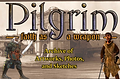
This page showcases nearly 40 sketches, concept drawings, artwork, and pieces of concept art created for Pilgrim: Faith as a Weapon on PC, Arxel Tribe's very first game. Shared by Nicolas Fructus and produced by the development team in collaboration with Moebius (Jean Giraud), these illustrations offer a rare glimpse into the early stages of development of this point-and-click adventure inspired by Paulo Coelho's novel The Pilgrimage (Le Pèlerin de Compostelle).
I would like to extend my sincere thanks to Guillaume de Fondaumière, Stephen Carrière, and Nicolas Fructus for their generosity, their availability, for sharing their Concept Art, and for taking the time to answer my questions. Their testimonies have allowed us to travel back to the development of Ring: The Legend of the Nibelungen on PC and Dreamcast, offering a fascinating glimpse into the golden age of the Point-and-Click games.
I would also like to thank the entire Arxel Tribe team who contributed to the studio's many projects, including Ring: The Legend of the Nibelungen for PC and Dreamcast (see the Ring credits on MobyGames).
Acknowledgements:
-
To Hicks for carefully proofreading the text, refining its phrasing, and making valuable corrections
-
To Neil Riddaway for expertly polishing the English version of this article
-
To Sizious for hacking the game
-
To Sined Collection for generously sharing the game with the community
-
To Dreamcast Me That for designing the cover
Similar prototypes (Unreleased): Agartha (DC) - Emulateur officiel Megadrive (DC) - Castlevania Resurrection (DC) - Half Life (DC) - Dalforce XOP (DC) - Flinstone (DC) - 4 x 4 Evolution PAL (DC) - Ring : L'Anneau des Nibelungen (DC) - Ecco 2 (DC) - Kyskrew (DC) - Propeller Arena (DC) - Geist Force (DC) - Scud Race Tech Demo Dreamcast - Shenmue 2 US (DC) - The Red Star (XBOX) - Heaven's Drive ( version japonaise de Burnout 1) pour PS2 - Jekyll and Hyde (DC) - The Grinch Jap (DC) - Worms Pinball (DC) - Quake 3 Arena version japonaise (DC) - Vectorman (PS2) - Fear Effect Inferno (PS2) - Over The Top Soccer (DC) - Fantasy Prototype (DC) - ToeJam & Earl III (DC)
Feel free to try out [The Dreamcast Unreleased Games to Download] that I found. For the more curious among you, I also wrote [The List of Cancelled Dreamcast Games], which references all of them along with information about each title.
